
How One High-Achieving Black Family Secured a $400K+ Full-Ride Scholarship Without Sacrificing Their Relationship
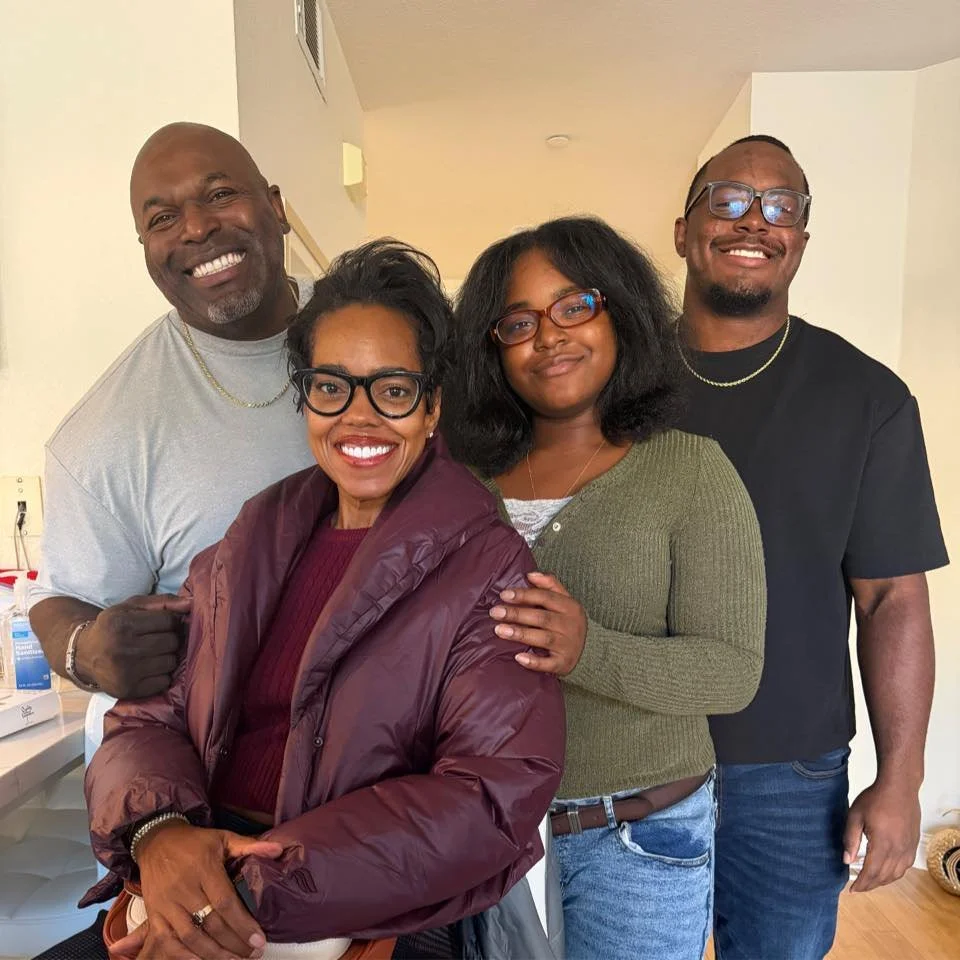
When Jennifer and Rycklon “Rick” Stephens started their daughter Samora’s college search, they had what most families dream of: strong academics, elite private schooling, and a multi-talented child who excelled in theater, athletics, and leadership. Yet even with their success and resources, they quickly realized something sobering—the rules of college admissions had changed.
THE HARSH REALITY
In the two years since the Supreme Court banned affirmative action in admissions, Black enrollment at many elite colleges has dropped sharply, with some campuses seeing Black freshmen shrink to as little as 2% of the new class, even though Black students make up about 14% of U.S. high school graduates.
At Princeton, the share of Black freshmen fell from 9% to 5%, and at Harvard it dropped from 18% to 11.5% in just two years. This is the landscape the Stephens family was navigating—and why they refused to leave Samora’s future to chance.

The New Reality for Black Families in Elite Admissions
For Jennifer’s generation, strong grades, solid extracurriculars, and race-conscious policies were often enough to open doors.
For her daughter’s generation, that formula no longer holds. Recent analyses of selective colleges show that, after the affirmative action ban, nearly all of the 20 elite campuses studied now enroll a smaller share of Black first-years than they did just two years ago, with several reporting declines approaching half of their previous Black freshman enrollment.
Meanwhile,
Black students comprise roughly 14% of American high school graduates, but often represent only 5–8% of the student body at highly selective institutions.
The Stephens family understood that this wasn’t a crisis of talent—Samora was already a standout. It was a crisis of strategy in systems that were never designed with families like theirs in mind.
Meet the Stephens
Successful in Every Room, But Still Missing a Roadmap
Jennifer Stephens is a Columbia University alumna and professional actor with a thriving performing arts career; Rick is a former WWE wrestler turned successful personal trainer and business owner in Silicon Valley.
Their daughter Samora attended Sacred Heart Preparatory in Atherton, an elite private school where most families benefited from legacy connections, generational wealth, and “doctor/lawyer/engineer” networks that opened doors to prestigious opportunities that they knew didn’t truly move the needle in admissions.
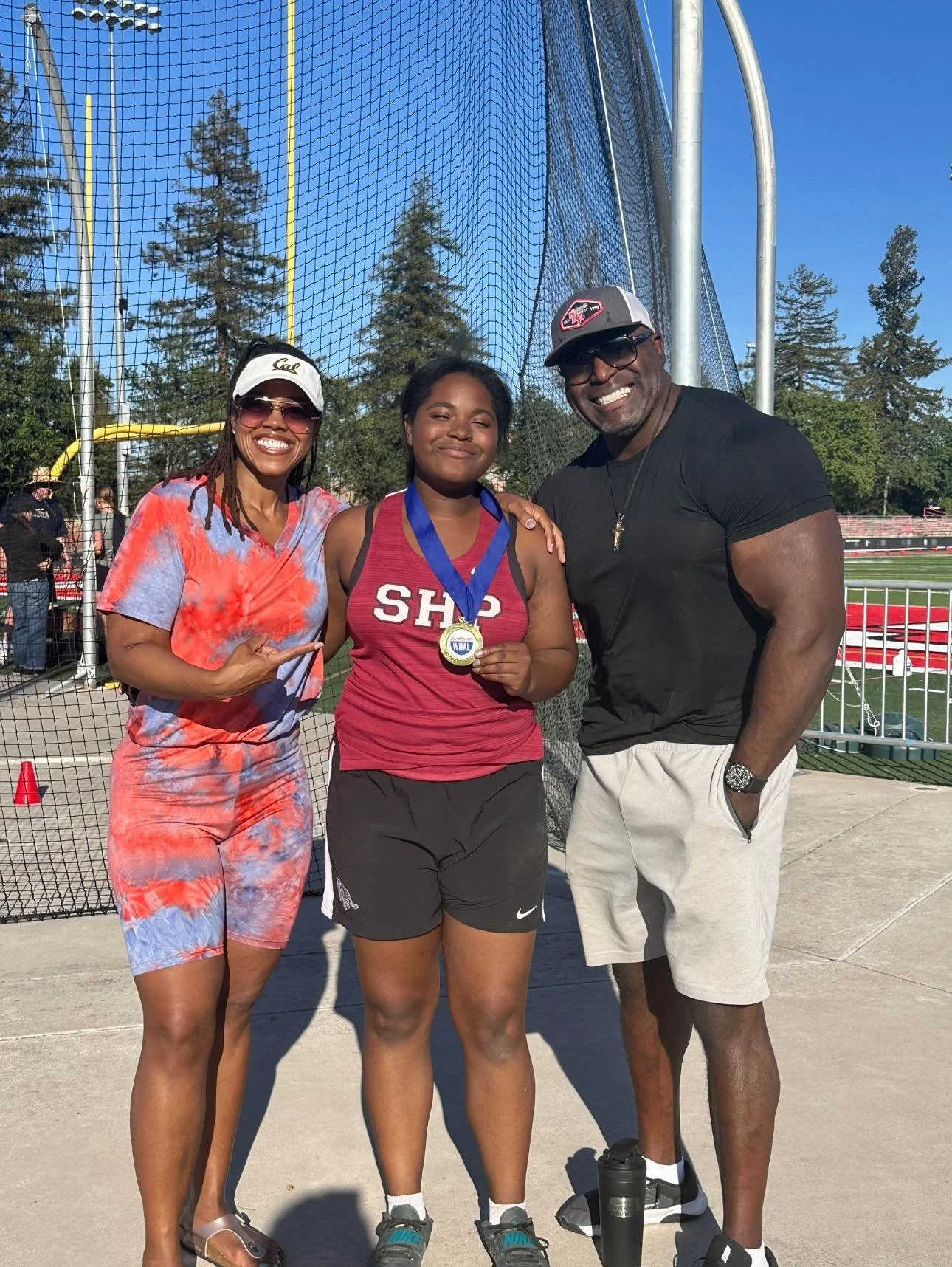
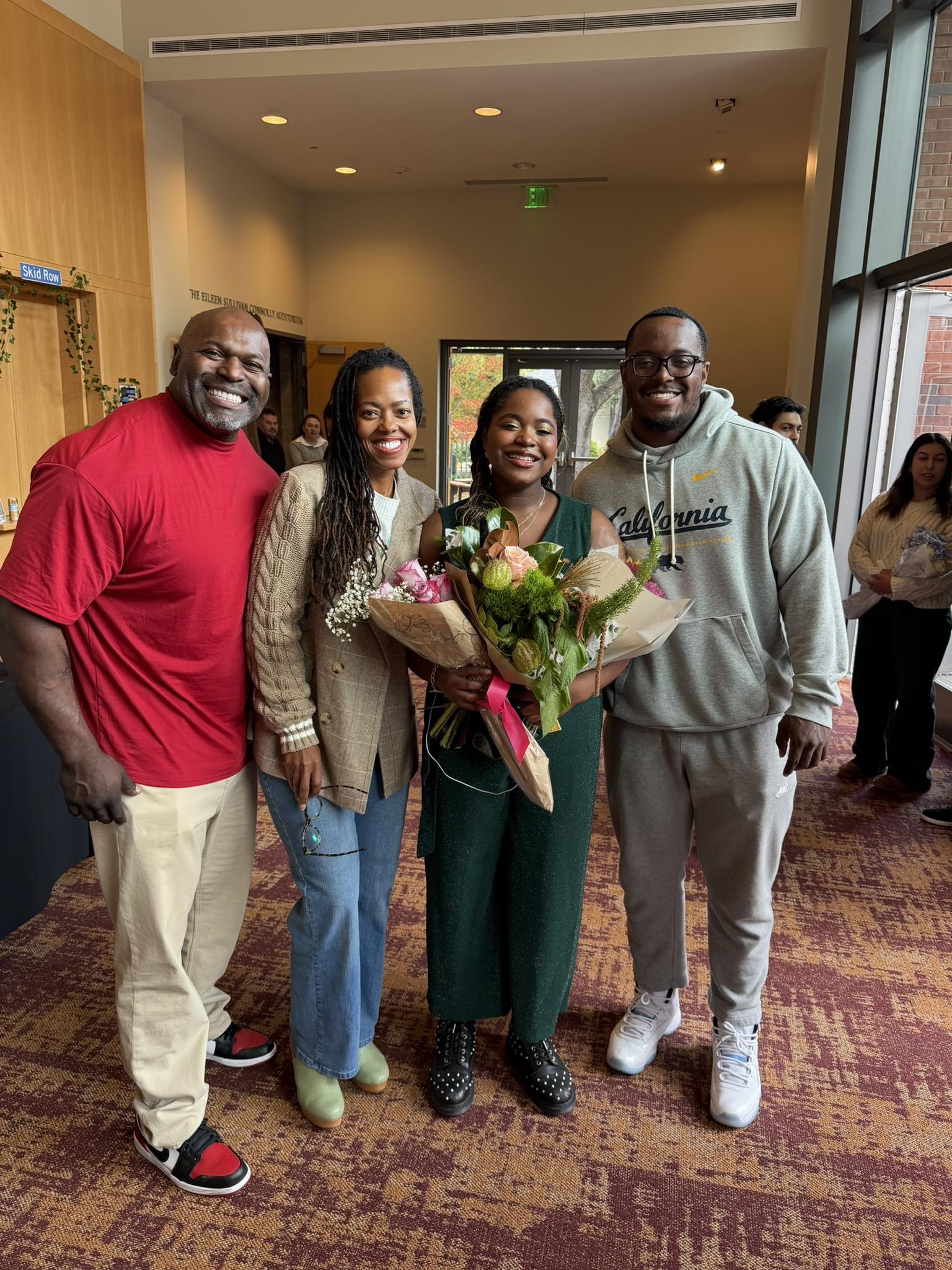
On paper, Samora was exceptional
3.5 cumulative GPA with AP and honors coursework
National-level shot put athlete (7th in the nation, WBAL Champion, CCS Top 10)
Award-winning theater artist with five full-ride theater scholarships (A.C.T., Broadway Artists Alliance and more)
Co-founder of her school’s Black Student Union and leader of inclusion initiatives affecting 500+ students
Mandarin speaker—a rare distinction among Black students in elite admissions contexts.
But the family still faced five critical challenges:
“We don’t fit in any box. We needed support, but in a way that was unique for us.”
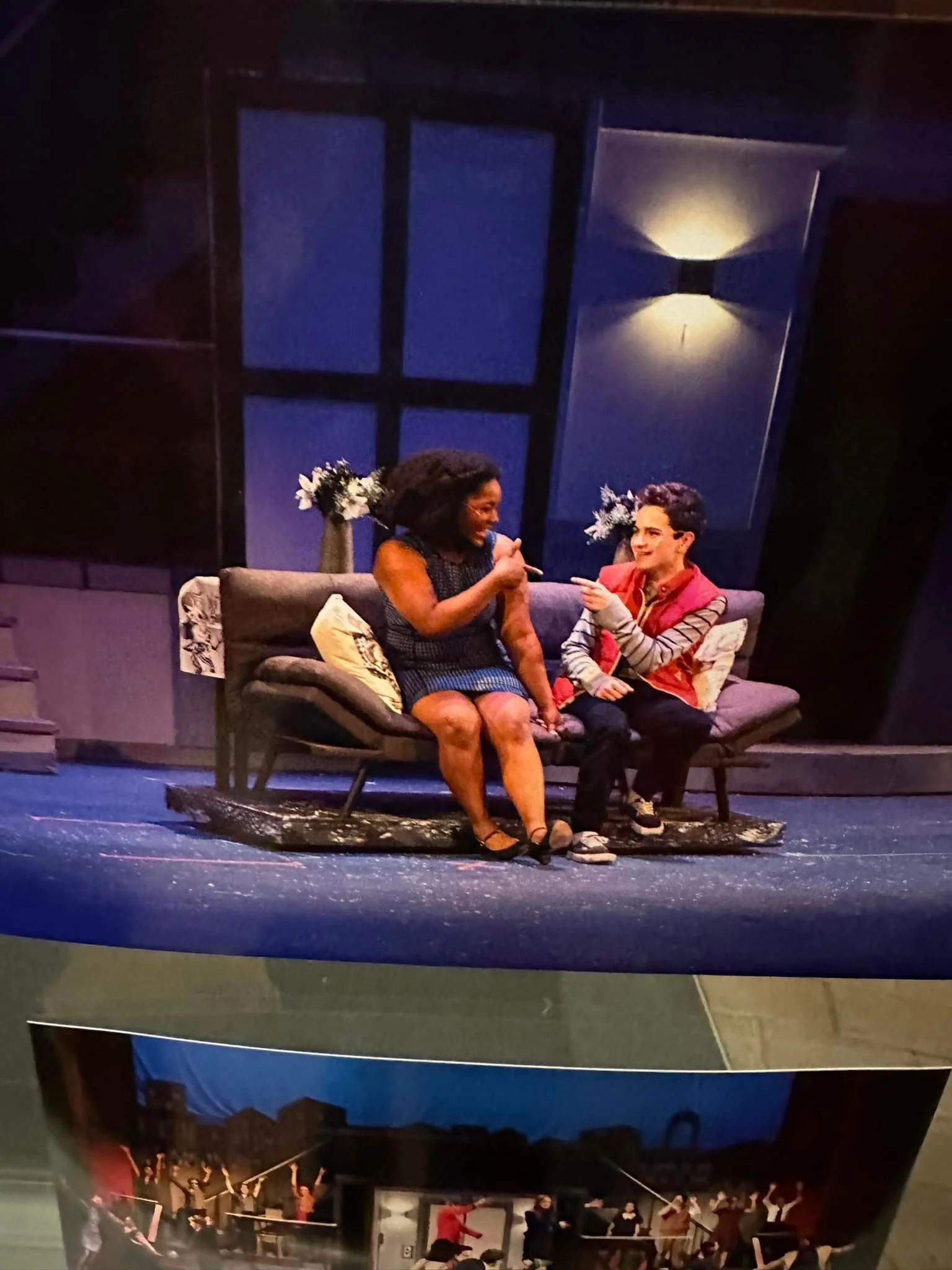
Samora performing in one of her school’s productions.
Why They Went Looking for Something Different
By the time the Stephens found us, they had spent months researching and vetting college counseling options—and feeling deeply unimpressed by plug-and-play, corporate-style programs that didn’t understand Black families.
She describes logging into Zooms where she was the only Black parent, surrounded by families and consultants who had little to no experience with non-Asian kids of color, yet spoke as if their advice applied universally.
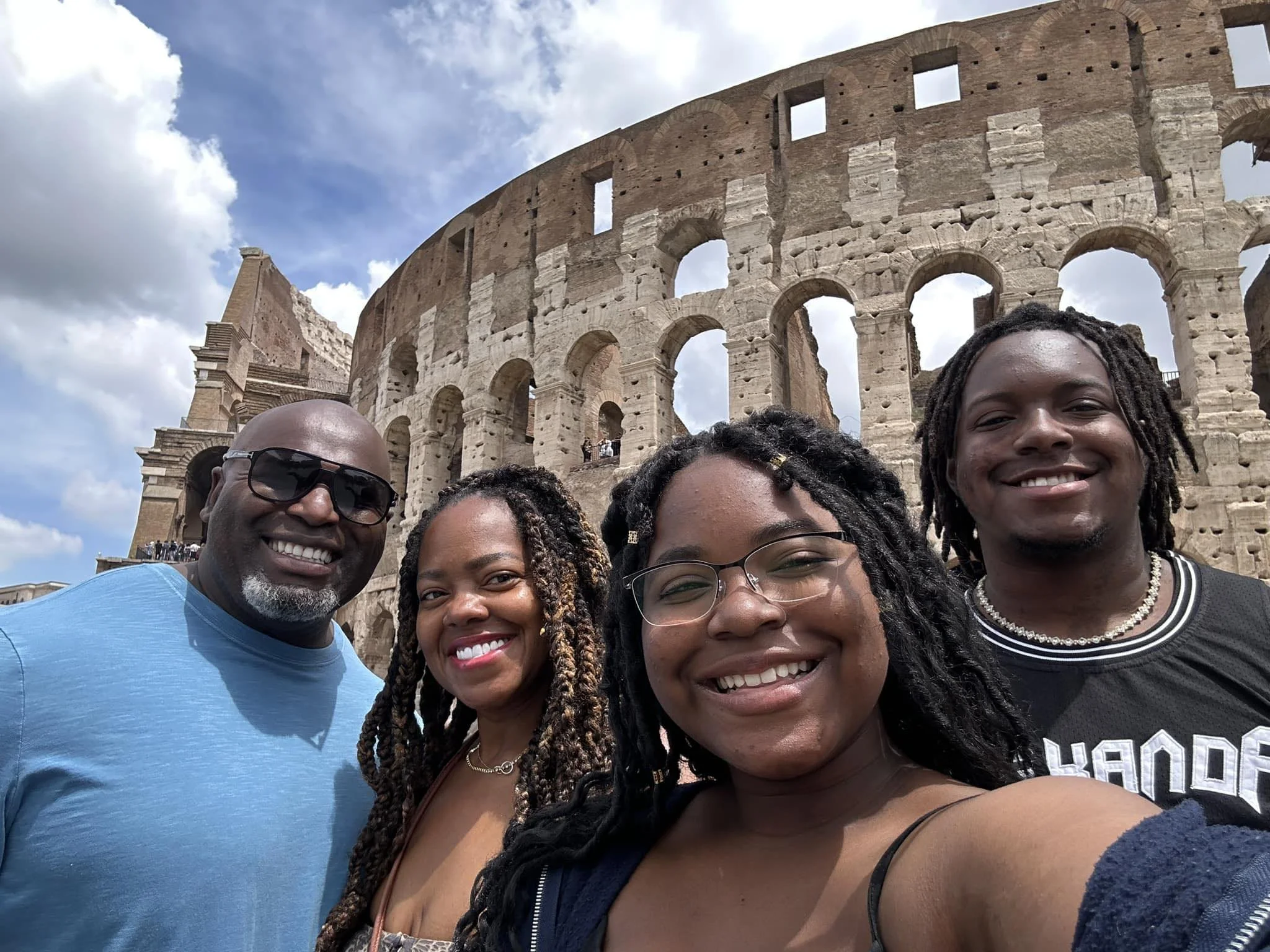
The Stephens on a family vacation in Rome, Italy.
What made them stop scrolling when they found US
-
Jennifer had always believed that the 8th–9th-grade window is where serious planning must begin. When she saw Nicole’s philosophy of starting in middle school and building a multi-year roadmap, she felt instantly understood.
-
Nicole had herself navigated elite admissions, winning the Princeton Prize in Race Relations, publishing a book at 19, and earning admission to multiple Top-20 schools, including Princeton—within the very landscape today’s students face.
-
“And she looks like her,” Jennifer remembers thinking. Her daughter had no one in her school community who looked like her; seeing a Black woman with elite credentials who understood the game—and the cost of playing it—was non-negotiable.
-
The TALL framework (Theme, Academics, Leadership, Lasting Impact) and Lionheart’s Entrepreneurial Leadership Roadmap mirrored the strategic thinking Jennifer and Ryck used in their own careers.
-
Jennifer knew Samora listened better when guidance came from someone who was not a parent. She was explicitly looking for a “secret weapon” who could steer her daughter without escalating conflict at home.
“This was a godsend.
Everything felt like a scam until WE found you.”
Inside the Transformation
From Scattered Strengths to a Sharpened Story
-
The breakthrough began with one of the most misunderstood parts of the process: the personal statement.
Samora wanted to write about dinosaurs and stuffed animals—a topic that initially raised eyebrows and faced pushback from her school counselor, who urged a more conventional essay angle. Instead of forcing a safer topic, Nicole dug into the meaning underneath the idea. The dinosaur traced back to a childhood friend who gave it to Samora during a major transition; for her, it symbolized safety, belonging, and the kind of community she wanted to create for others.
Together, they turned this into a powerful metaphor for Samora’s deepest value: building safe spaces for those around her. The result was an essay that was:
Unconventional but deeply grounded
Emotionally resonant without being performative
Strategically aligned with her leadership and service.
When outside adults suggested she change it, Nicole backed her. That essay became one of the strongest elements in her application—and a model of what authentic, culturally grounded storytelling looks like in a post-affirmative action world.
-
Samora wasn’t “just” a theater kid or “just” an athlete or “just” a strong student. She was all three—and typical college counseling would have pushed her to flatten herself into a single identity.
Nicole helped the family design a Dual Athlete-Artist positioning that made Samora rare in the applicant pool:
Competing at a high level in track and field (shot put)
Holding national-caliber theater and performance achievements
Maintaining a rigorous academic profile
Leading in social justice and inclusion work on campus.
Instead of treating these as disconnected pursuits, Nicole and Samora identified Scripps College as a place where she could:
Compete in Division III track and field
Continue performing in theater through the 5-college consortium
Stay close to her family in Southern California
Be seen as fully herself—in the classroom, on the stage, and on the field.
Shot put, in particular, became a strategic differentiator. It is relatively underrepresented, and pairing that with strong interview skills and a strong artistic profile allowed Samora to stand out in a way that numbers alone never could. When the coach asked whether she would interview well, Jennifer answered without hesitation: “That’s where she shines.”
-
The Stephens’ reality was complex: a Black family in an elite, predominantly white private school, with access to some privileges and resources—but not the legacy networks or assumptions that many of their peers enjoyed.
Jennifer was clear: “She is not this rich kid from this private school,” she said, noting that while speaking Mandarin was considered “normal” for some families, it was an extraordinary achievement in theirs. The family also felt the constraints of environments where “you couldn’t even mention race” openly, even as racial dynamics shaped daily life.
Nicole’s role was to help them:
Contextualize Samora’s achievements without centering deficit narratives
Honor the realities of navigating elite white spaces as a Black student
Avoid stereotype-driven storytelling while still naming the truth of the experience
Translate that complexity into a compelling, coherent narrative for admissions committees.
In a moment when data show Black enrollment backsliding at elite campuses after decades of gradual progress, this level of cultural fluency is no longer optional—it is integral to strategy.
-
Behind the scenes, Lionheart managed the pieces most families underestimate:
A paced testing strategy that reduced Samora’s anxiety while steadily improving her scores
A clearly mapped application timeline, structured around Early Decision, that kept the family ahead of deadlines
Regular coaching sessions that built Samora’s confidence, communication, and self-advocacy skills
Parent coaching that gave Jennifer and Rick permission to step back without disengaging.
“You were such a support for both of US. It calmed us. I knew I had a second set of eyes that cared, that I trusted, on so many levels.”
The Moment Everything Changed
Within the first week of Early Decision notifications, Samora had:
A full-ride scholarship to Scripps College worth more than $400,000
A guaranteed roster spot on the track and field team
Access to robust theater opportunities through the Claremont Colleges consortium
Financial stability that meant her parents did not have to go into debt or compromise on fit.
Between merit, athletic, and arts-based awards, the Stephens family secured over $400,000 in scholarship value—and, more importantly, a future where Samora can graduate debt-free.

When You’re Allowed to Be Yourself, Everything Clicks
Samora shares how honoring her own pace, voice, and flow helped her move from resistance and pressure to clarity, confidence, and a full-ride college outcome—without sacrificing her creativity, mental health, or authenticity.
What Actually Changed for This Family
The Metrics That Matter
-
1 Early Decision application submitted
1 admission to her top-choice school (100% acceptance rate)
$400,000+ in scholarship value, covering all four years
Acceptance within the first week of Early Decision notifications.
-
3.5 cumulative GPA with AP English and multiple honors classes
Mandarin fluency, rare in national Black applicant pools
Founder of the Black Student Union at Sacred Heart Prep
Leader in SURJ initiatives, coordinating inclusion work for 500+ students
5+ full-ride theater scholarships (A.C.T., Broadway Artists Alliance, and others)
7th in the nation for shot put, WBAL Champion, CCS Top 10.
-
Preserved and strengthened parent-child relationship during one of the most stressful seasons of adolescence
Authentic, confident written and spoken voice that Samora will carry into college and beyond
A financial foundation that allows her to start adulthood without the burden of student debt.
Who This Story Is Really For
If you are a Black executive or professional, this may sound familiar:
-
corporate leadership, law, finance, tech, medicine, entrepreneurship—but you did not grow up with the playbook your peers’ children now benefit from.
-
maybe even an elite private school, yet you know the school’s counseling office was not built with your family’s reality in mind.
-
and want a clear, strategic roadmap—not vague encouragement.
-
and the data showing Black enrollment declining at selective colleges, and you refuse to let your child be another statistic.
-
in their fullness—brilliant, complex, multidimensional—without sanding down their identity just to “fit.”
How WE are Engineering Access for Black Families
We exist to give Black families the strategic, culturally competent guidance most elite institutions never had to build. The approach combines:
-
Working backward from top-tier goals so your child’s four years of high school compound into distinction instead of scattered activity.
-
Identifying a clear, authentic theme that ties your child’s academic strengths, leadership, and projects into a narrative admissions committees can immediately understand.
-
Moving beyond title-collecting to build projects that solve real problems with measurable impact, especially in communities and contexts that matter to your child.
-
Focusing on where your child can thrive—academically, socially, and financially—rather than chasing names that don’t align with who they are.
-
Helping your child tell the truth about their experience navigating predominantly white elite spaces without reducing them to trauma or stereotype.
-
Taking pressure off parents so they can preserve relationship, not become the enforcer.
For the Stephens family, this translated into a:
targeted Scripps strategy,
bold yet deeply personal essay,
coherent athlete-artist profile,
DEBT-FREE financial outcome
that changed the trajectory of Samora’s adulthood.
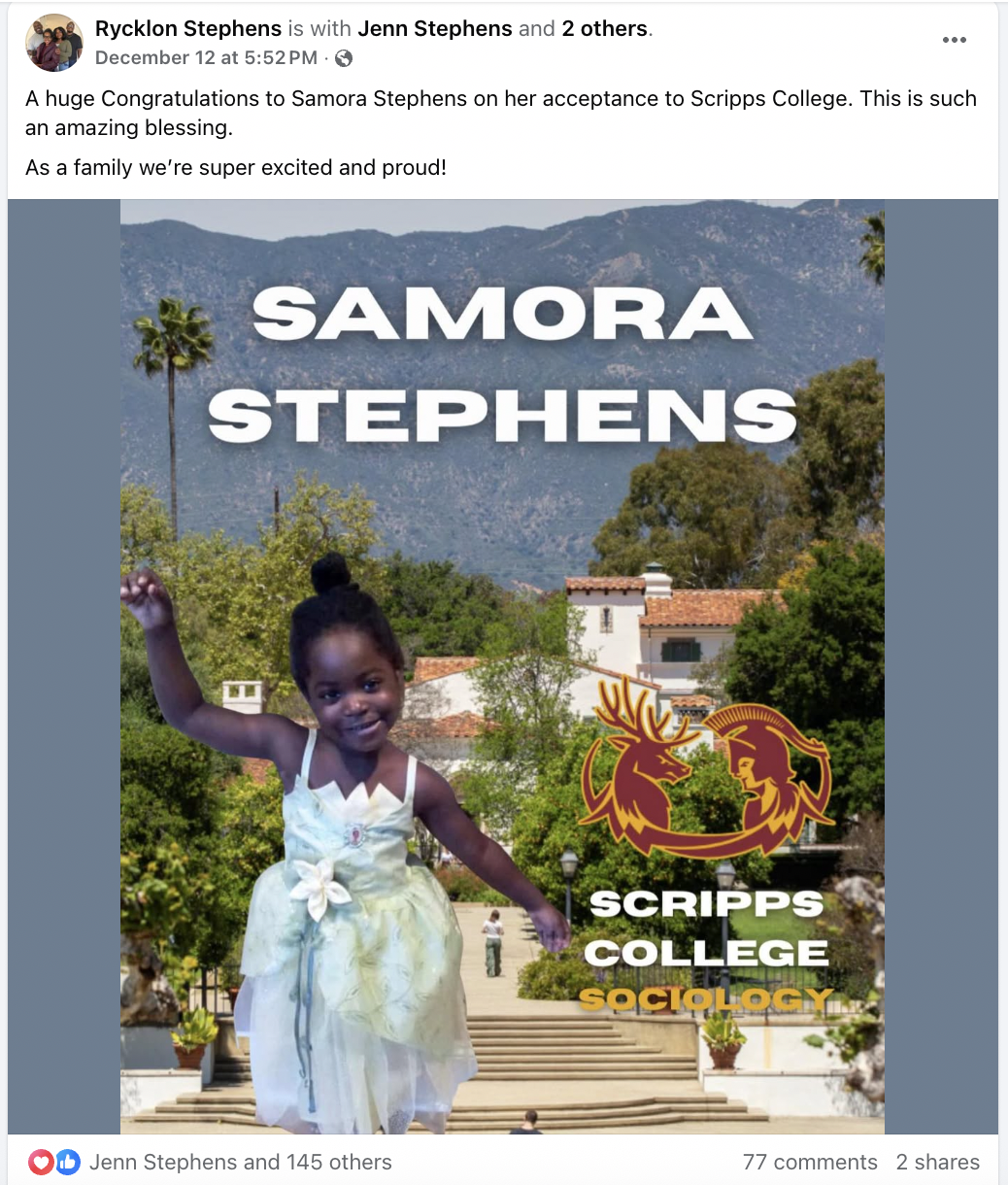
What THE STEPHENS Want Other Parents to Know
Ready to Write Your Family’s Version of This Story?
The post-affirmative action landscape has made elite admissions more competitive, less transparent, and more unforgiving for Black students—even those with every apparent advantage. But the right combination of strategy, cultural competence, and early planning can turn uncertainty into a clear, executable roadmap.
If you recognize your family in the Stephens’ story—successful, forward-thinking, deeply invested in your children, and unwilling to gamble with their future—it is not too early, and it is not too late, to build a plan.
You’ve mastered the game in your world. Now it’s time to make sure your child has someone who knows the rules in theirs.
Schedule a consultation to map out your child’s strategic path to top-tier college access—without sacrificing their wellbeing or your relationship.