
Defy the Decline: Weekly Interview Series
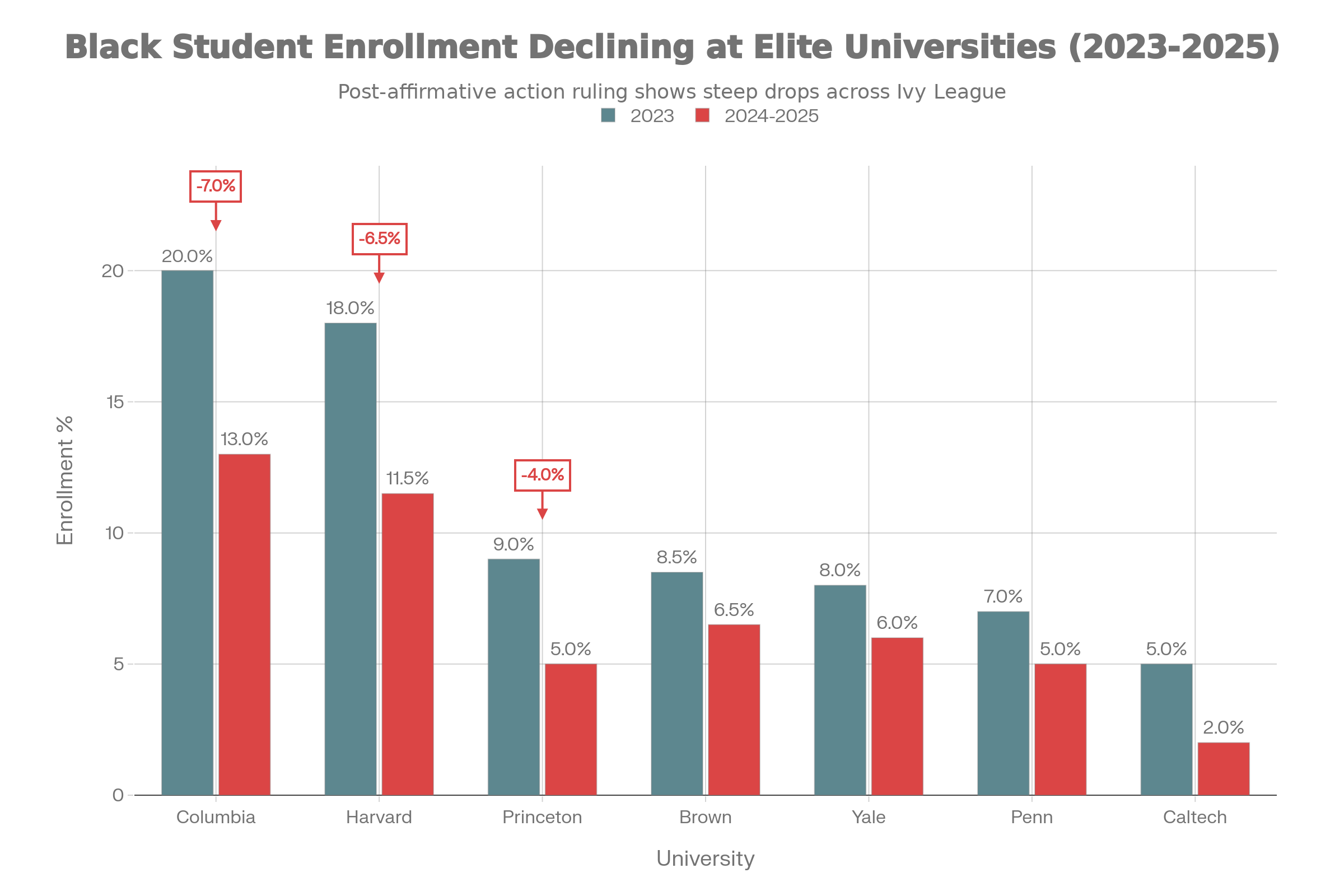
Harvard's Black freshman class just dropped from 18% to 11.5%.
Princeton's crashed from
9% to 5% in a single year.
DEFY THE DECLINE
DEFY THE DECLINE
Your family shouldn't be guessing what happens next.
ABOUT THE SERIES
Affirmative action is gone.
The consulting industry remains overwhelmingly white. Your child's competitive advantage? Strategic intelligence from inside the system—every single week.
DEFY THE DECLINE
·
CREDIBLE INSIGHT
·
STRATEGIC ADVANTAGE
·
DEFY THE DECLINE · CREDIBLE INSIGHT · STRATEGIC ADVANTAGE ·
The numbers don’t lie.
Two years after the Supreme Court dismantled affirmative action, Black enrollment at elite universities has collapsed. Princeton’s sophomore class has 50% fewer Black freshmen than it did three years ago.
At Harvard, Columbia, and Yale—institutions with multi-billion-dollar endowments—Black representation has fallen by 30-50% in back-to-back years. Meanwhile, at Caltech and Bates College, Black freshmen now represent just 2% of the student body.
Here’s what nobody talks about:
This isn’t a diversity crisis.
It’s an access crisis.

The game changed the moment affirmative action ended. Grades and test scores—the things most families are grinding toward—are now the baseline, not the differentiator. Thousands of straight-A students won’t get in. But some will.
The ones who will? They have something else.
They have inside knowledge. They understand how scholarship committees actually evaluate leadership. They know which experiences convert to “merit” that moves needles. They built portfolios that tell a story admissions officers can’t ignore.
And here’s the hard truth:
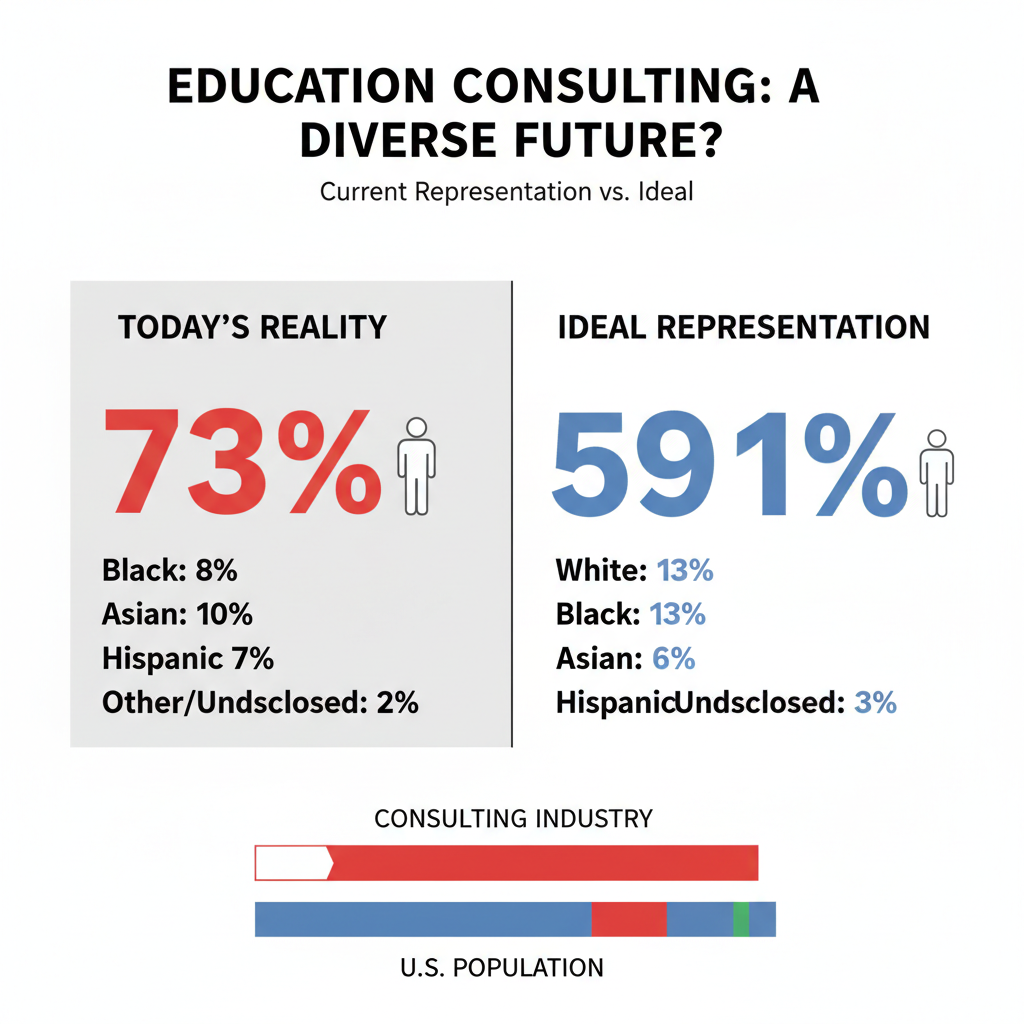
Educational consulting is 73% white-led. The firms making $50K/year per student to guide high-achievers through admissions? Built for families who already know the rules. The industry’s silence on the intersection of elite admissions AND merit aid strategy leaves Black families navigating the most consequential financial decision of their lives with incomplete information.
You didn’t build an executive career by playing with incomplete data. Your child shouldn’t either.
THE OPPORTUNITY
-
The families whose teens are still winning admission to elite universities—and graduating debt-free—aren't just lucky. They're strategically positioned.
-
After affirmative action ended, colleges didn't stop looking for Black students. They started looking for a different kind of Black student.
-
The student who solved a problem. Who led something that mattered. Who turned curiosity into measurable impact.
The student admissions officers look at and say: "We need this kid. They're going to change things here."
Your family's future depends on this—and the data proves it.
-
Graduates of top 20 universities earn 27% more over their lifetimes than graduates of other four-year institutions. They're twice as likely to reach top executive positions. They have access to networks, internships, and opportunities that simply don't exist elsewhere.
-
If your child attends an Ivy League school at full price, four years costs $320,000. For universities like Duke, Vanderbilt, or Rice that offer merit scholarships, that same education could cost $0 with full merit aid—or $60K–$120K with partial merit.
That $200K–$320K difference isn't just tuition. It's:
A down payment on a home
Seed capital for a business
Generational wealth preserved, not depleted
Your child starting their career debt-free, not $300K in the hole
-
Black college graduates already owe 30% more in student loan debt than white peers and earn 25% less in early career. The debt trap is real—and it compounds.
Attending a T20 university is the advantage. Graduating debt-free is the multiplier.
Elite admission without strategic positioning = financial burden disguised as opportunity.
Strategic positioning = access to T20 networks, leadership training, and career outcomes—without the debt sentence.
This series teaches your family how to win both: the admission that transforms trajectories, and the financial strategy that preserves wealth.
Here's what that positioning looks like in practice:
-

ENTREPRENEURIAL LEADERSHIP
Leadership that's entrepreneurial, not performative — Starting something vs. joining something
-

PURPOSE-DRIVEN ENGAGEMENT
Academic excellence framed as purpose, not compliance — "I'm studying this because I'm building toward this"
-

SCALABLE IMPACT
Service and impact that's specific and measurable — Real problems solved, not hours logged
-

COHESIVE NARRATIVE
A narrative that connects everything — Not a list of achievements; a story of who they're becoming
And here's the part most families don't realize:
This same positioning unlocks both elite admission AND competitive merit scholarships at top universities that offer them.
Four years at a top university costs $240,000–$320,000 full price. Many elite universities outside the Ivy League—Duke, Vanderbilt, USC, Emory, Rice, Washington University—offer full-tuition or full-ride merit scholarships to students positioned as leaders they can't pass on.
If your household income is $500K–$900K, you won't qualify for need-based aid at Ivies. But merit scholarships at schools like Duke, Vanderbilt, and Rice can cover $200K–$320K over four years—making elite education debt-free while preserving your family's wealth.
The positioning that wins Ivy League admission is the same positioning that wins six-figure merit scholarships at peer institutions.
What You'll Learn in This Series.
By the end, your family will understand:
The hidden criteria admissions officers actually use at both Ivy League and merit-offering elite universities
How to position academics as evidence of vision, not just achievement
Which experiences signal "future leader" vs. "well-rounded and forgettable"
The narrative architecture that converts strong applications into admission at Ivies AND merit scholarships at Duke, Vanderbilt, Rice, USC, and others
Why your child's current strategy might be accidentally designed to make them invisible
How recent grads—Rhodes Scholars, startup founders, young attorneys—positioned themselves to win elite admission and competitive scholarships
WHO’S SPEAKING
Each week, a different voice from the elite professional ecosystem:
C-Suite executives from finance, law, tech, and healthcare explaining what they look for in leaders they’re hiring (and why colleges haven’t figured it out yet)
Recent Rhodes Scholars and Marshall Fellowship winners walking through the exact choices they made in 9th-12th grade that led to those doors opening
Startup founders and venture capitalists discussing how they spot founders-in-the-making in high school
Young attorneys, physicians, and nonprofit leaders breaking down the relationship between elite college choice and career launch
Women and men from different geographies, undergrad pathways, and family backgrounds—proving that there is no single “Ivy League type,” but there is a pattern in how winners think strategically
What they all share: They grew up Black in spaces designed for someone else. They figured out the system anyway. And now they’re teaching your family how to do it intentionally, not by accident.
WHY NOW?
-
Your child used to have two levers: grades/test scores + demographic diversity. Now there’s one lever: strategic differentiation that colleges and scholarship committees recognize as valuable. That requires new thinking.
-
If your household income is $500K–$900K, your child is getting $0 in need-based aid from Harvard. But you’re paying $60K+ per year for four years. Merit scholarships—which ignore income and focus on excellence + leadership—are the only path to significant aid. Yet most families don’t even know how to position for them. This series teaches that positioning.
-
Crimson Education, The Princeton Review, and Kaplan are multibillion-dollar firms. They’re white-led, generic, and designed for students who fit a default mold. There are no spaces built specifically for Black executives’ children learning to navigate selective admissions in the post-affirmative-action era with a focus on merit aid strategy and authentic leadership development.
This series is that space.
HOW THIS WORKS
You register once. You get access to everything.
-
A new 45-minute conversation with a guest from the elite professional ecosystem
-
Watch live or on-demand; your teen can watch twice, take notes, do the follow-up exercises
-
We’ll remind you of each guest, the topic, and why it matters for your child’s positioning.
-
For the entire series, no weekly payments, no upsells, no “limited access.”
-
We provide both discussion frameworks.
Your family didn’t build an executive career through luck.
You built it through information advantage, strategy, and intentionality.
Your child deserves the same advantage.
Affirmative action is gone. And for the next several weeks, some of the most successful Black professionals in America are teaching your family exactly how to win.